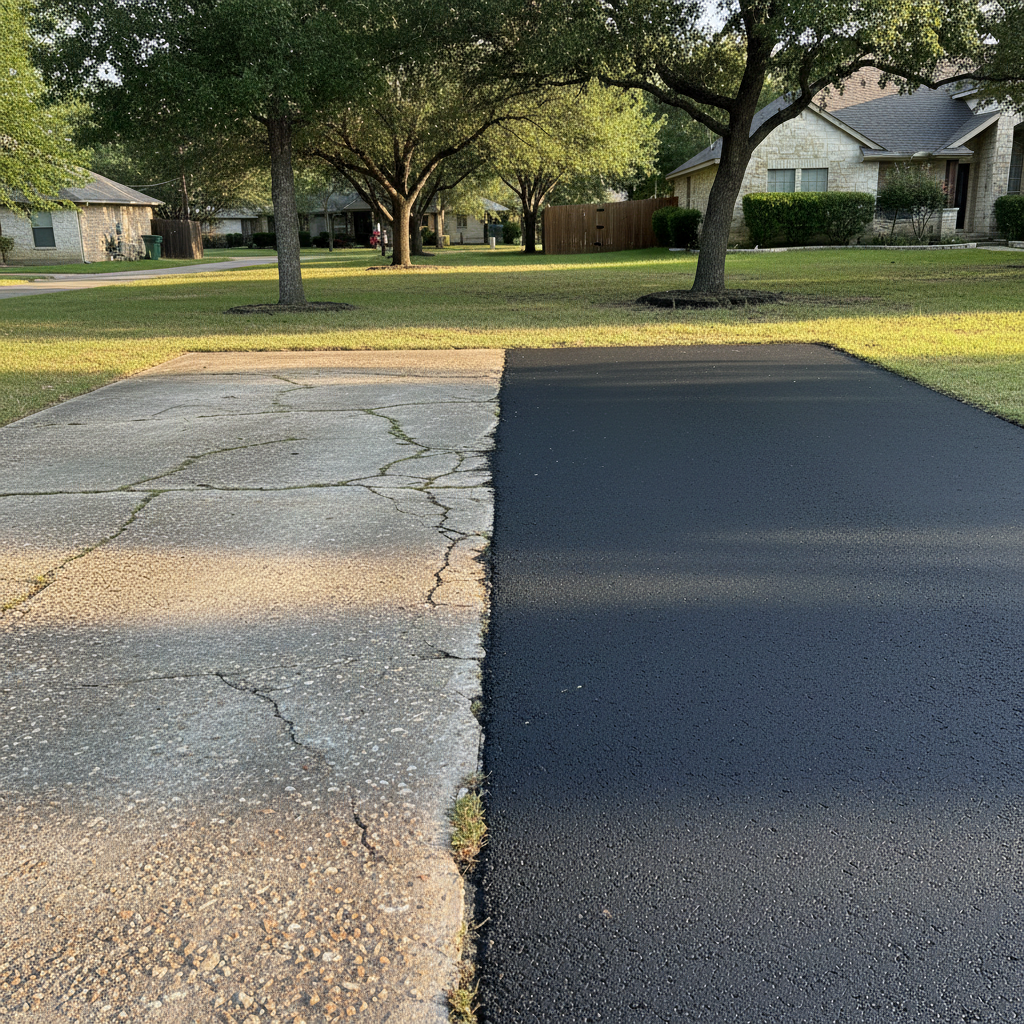
Alright, let's talk driveways. Specifically, asphalt driveways. If you're a homeowner in Georgetown, sooner or later, you're going to look at that cracked, faded, or potholed surface and think, "It's time." But then the big question hits: do you just slap a new layer on top, or do you tear it all out and start fresh? We're talking about asphalt overlays versus full depth replacement, and trust me, there's a big difference.
What's an Asphalt Overlay?
Think of an overlay like putting a fresh coat of paint on a wall that's still structurally sound. With an asphalt overlay, we're essentially paving a new layer of asphalt directly over your existing, damaged asphalt driveway. Before we do that, though, we've got to prep the surface. That means cleaning it thoroughly, filling any major cracks or potholes, and sometimes applying a tack coat to help the new layer bond. It's a faster process, generally less invasive, and often, it's the more budget-friendly option upfront.
What's Full Depth Asphalt Replacement?
Now, full depth replacement is a whole different ballgame. This is when we completely remove your old driveway – every single layer, right down to the dirt. Then, we start from scratch. We'll often re-grade the sub-base, compact it properly, lay down a new aggregate base layer (that's the crushed rock underneath), and then apply one or more layers of fresh asphalt. It's a bigger job, takes more time, and yes, it costs more. But sometimes, it's the only real solution.
Cost: The Immediate Sticker Shock
Let's be blunt: overlays are almost always cheaper upfront. You're using less material, and the labor involved in tearing out and hauling away old material is eliminated. For a typical Georgetown residential driveway, an overlay could be anywhere from 30% to 50% less than a full depth replacement. That's a significant chunk of change, especially if you're on a tight budget. But don't let that be your only deciding factor. Cheaper upfront doesn't always mean cheaper in the long run.
Durability & Longevity: How Long Will It Last?
This is where the rubber meets the road, literally. An overlay's lifespan is directly tied to the condition of the pavement underneath. If your existing driveway has minor surface cracks, fading, or shallow potholes, an overlay can give you another 7-15 years of good service. But if the underlying structure is failing – we're talking extensive alligator cracking, deep potholes, or areas that are constantly sinking – then an overlay is just a band-aid. Those structural issues will eventually telegraph through the new layer, and you'll be dealing with cracks and failures again much sooner, sometimes in just a few years.
A full depth replacement, on the other hand, gives you a completely new foundation. When done right, with proper sub-base preparation and compaction, you're looking at 20-30 years, or even more, with good maintenance. It's built to last because we've addressed any underlying issues from the ground up. This is especially important in areas like Georgetown where we have expansive clay soils that can shift and cause foundation problems if not properly managed during construction.
Maintenance: Keeping It Looking Good
Both types of asphalt driveways benefit from regular maintenance. That means keeping it clean, sealing cracks as they appear, and sealcoating every few years. For an overlay, staying on top of crack sealing is even more critical because any water that gets through to the old layer can accelerate its deterioration and cause problems. With a full depth replacement, you're generally starting with a clean slate, so your maintenance efforts are focused on preserving the new, strong surface.
Appearance: First Impressions Matter
A fresh asphalt overlay looks fantastic when it's first done. It's smooth, black, and gives your property a nice curb appeal boost. However, if there are significant dips or humps in your old driveway, an overlay might not completely smooth those out. It tends to follow the existing contours. A full depth replacement, because we're starting from scratch, allows us to achieve a perfectly smooth, level surface, which often looks more professional and can even improve drainage if we adjust the grading.
My Recommendation for Georgetown Homeowners
Here's the deal: if your driveway has minor surface wear, a few small cracks, and no major structural issues (like large areas sinking or severe alligator cracking), an asphalt overlay is a perfectly viable and cost-effective solution. It'll give you a great looking driveway for years to come. I've done plenty of them around Georgetown, and folks are always happy with the result.
However, if your driveway looks like a patchwork quilt of repairs, has significant dips, standing water issues, or widespread deep cracking, you're really just delaying the inevitable with an overlay. You'll spend money now, and then you'll be spending more money again in a few years for a full replacement. In those cases, I always recommend biting the bullet and going with a full depth replacement. It's a bigger investment upfront, but it pays off in long-term durability, fewer headaches, and a truly solid, beautiful driveway that'll stand up to our Texas heat and occasional heavy rains for decades. At Apex Paving Solutions, we'll always give you an honest assessment of what your driveway truly needs, not just what's cheapest or easiest for us.